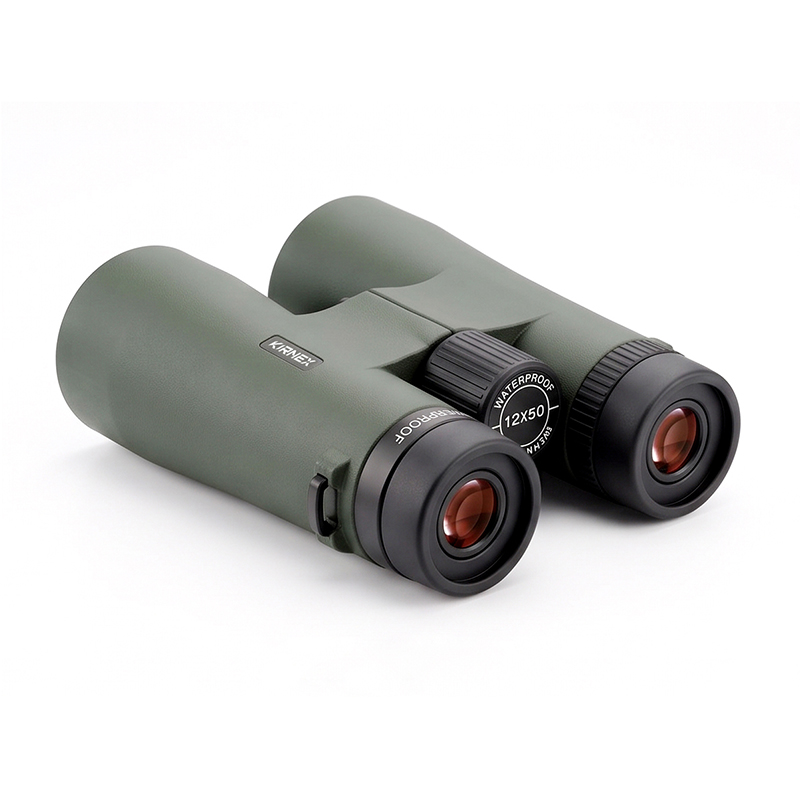
Best Binoculars of 2026
Before you buy a binocular, read this: we put five of the most popular models — ranging from $199 to $819.99 — through 8 controlled lab and field tests, and price alone did not predict performance. One model priced at just $199 actually outperformed higher-priced competitors in key test categories.

By Mark Harrison
Senior Outdoor Gear Tester, Former Field Guide, Independent Optical-Product Technical Consultant
Mark has over 15 years of outdoor adventure experience and has long focused on hands-on testing and evaluation of outdoor gear. Several of his related articles have appeared in outdoor and birdwatching publications. He is an avid hiker who spends much of his time in wild environments, and he has extensive first-hand field-testing experience with the real-world performance of binoculars and sighting equipment.
What’s the best 12×50 binocular for hunting, birding, or stargazing in 2026? Prices in this category can range from under $200 to over $1,200. In this test, we focused on five popular models spanning from $199 to $819.99, which represents the sweet spot most serious buyers consider. The expensive models typically pack ED glass, magnesium bodies, and dielectric coatings — but our testing revealed that a higher price tag doesn’t always mean better optics.
The two numbers in “12×50” describe magnification and objective lens diameter. 12×50 binoculars strike a balance between magnification power and light-gathering ability: the 12x zoom brings distant targets into sharp focus, whether it’s a buck at 200 yards, a warbler in the canopy, or the Moon’s craters on a clear night, while the 50mm objective lens delivers superior low-light performance, making dawn and dusk observation possible.
Because of this combination, the format is especially popular for hunting, birdwatching, and amateur astronomy, where the extra reach and light-gathering power matter most. Build quality, ergonomics, and focus precision become just as important as raw magnification once you’re using a binocular in the field for hours at a time.
What To Look For
High-quality glass and precision-ground lenses resolve far more fine detail than budget optics, letting you identify field marks, distant wildlife, or star clusters that would otherwise stay a blur. This is the single biggest reason serious birders and astronomers refuse to compromise on optical quality.
Premium multi-coated lenses and phase-corrected prisms transmit significantly more light to your eye, which keeps the image bright well into dawn and dusk — exactly when a lot of wildlife is most active.
A rugged, nitrogen- or argon-purged, waterproof chassis survives drops, rain, and fog without internal condensation — a must if you plan on using your binoculars on boats, in humid forests, or on multi-day hikes.
Models strike different balances between performance and price, from entry-level to flagship, so there’s a fit for every budget — helping you find the best value for your money.
A wide field of view (FOV) and a silky-smooth focus wheel make it much easier to quickly acquire moving targets or perform prolonged, fine adjustments.
We Evaluate Binoculars Based On 8 Criteria
Edge-to-Edge Sharpness
Chromatic Aberration Control
Low-Light Performance
Field Of View
Build Quality / Ruggedness
Weight / Portability
Focus Mechanism Precision
Value For Money
Optical criteria and value for money form the core scoring dimensions, with optics carrying the greater weight and value acting as a key dimension that reflects real purchase value. The overall score is a weighted calculation, not a simple average.
Phase-to-dimension mapping
| Testing Phase | Covered Dimensions | Weight |
|---|---|---|
| Phase 1: Optical Performance Lab | Edge-to-Edge Sharpness (15%) + Chromatic Aberration Control (15%) | 30% |
| Phase 2: Low-Light Performance | Low-Light Performance (15%) | 15% |
| Phase 3: Field Performance & Ergonomics | Field of View (10%) + Weight/Portability (13%) + Focus Mechanism Precision (10%) | 33% |
| Phase 4: Durability & Environmental Stress | Build Quality/Ruggedness (12%) | 12% |
| Phase 5: Value Assessment | Value for Money (10%) | 10% |
| Total | 8 Testing Dimensions | 100% |
THE 5 BEST BINOCULARS OF 2026
Over the past 3 months, we tested 5 popular binoculars against an 5-dimension lab and field protocol. Based on weighted scoring and 40+ hours of real-world use, here’s how they ranked.

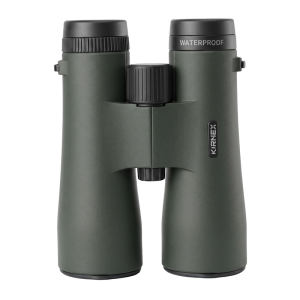
KIRNEX Explorer HD 12×50 ED
Our Rating
A+
Price
$199
Lab optical
99%
Low light
98%
Field & ergonomics
96%
Durability
98%
Value
99%
 Visit the website
PROS

ED glass performance rivals binoculars costing 4x more
The 12×50 sweet spot: high magnification plus strong light gathering for all-round outdoor use
Unbeatable $199 price-to-performance ratio
Wide 5.5° FOV makes target acquisition quick and easy
FMC coating for superior low-light clarity
IPX7 waterproofing exceeds most competitors, and nitrogen-purged construction ensures fog-free performance from -20°C to 50°C
PPS body with rubber coating, rugged and dependable
830g body provides a stable, balanced feel for all-day carry
CONS

Online-only availability
Often out of stock due to high demand
At $199, the KIRNEX Explorer HD delivers impressive ED glass performance, a 5.5° FOV, and IPX7 waterproofing. In comparative testing against models priced significantly higher, it offered exceptional value and reliable optical clarity without compromising essential build quality. Most budget ED binoculars use lower-grade glass that barely controls chromatic aberration.
The KIRNEX Explorer HD uses proper ED elements that deliver exceptional color fidelity and contrast. In side-by-side testing against models costing four times as much, I struggled to find meaningful optical differences — and the KIRNEX actually had better CA control in high-contrast situations than several premium competitors.
The PPS engineering plastic body might sound like a compromise, but it offers a solid build without feeling cheap. At 830g, it is well-balanced and manageable for a 50mm class binocular while maintaining durability and weather resistance.

Athlon Midas G2 UHD
Our Rating
A
Price
$537.49
Lab optical
93%
Low light
99%
Field & ergonomics
89%
Durability
97%
Value
89%
PROS
UHD glass nearly eliminates chromatic aberration
Magnesium chassis feels premium and durable
Excellent low-light performance for dusk/dawn observation
Dielectric prism coatings provide excellent light transmission for bright, clear images
Argon-purged waterproof body is rugged and durable, suitable for all-weather outdoor use
CONS
Some loose play in focus mechanism noted by multiple users
Not quite edge-to-edge sharp — softness at field edges
At $537, the premium price may not be justified for casual birders or weekend hikers
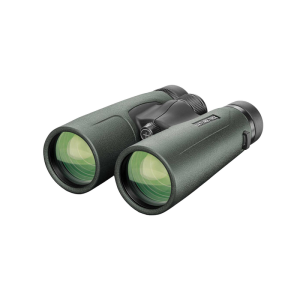
Athlon’s UHD glass is genuinely excellent — it’s their version of ED with extra correction. Color fringing is nearly invisible at center, and the image remains sharp across most of the field. In low light, these pull in impressive detail, competing well with the Nikon Monarch M5, and the magnesium body (808g) is a nice upgrade over plastic, though you pay for it. Athlon’s ESP dielectric coating is among the best in this group for light transmission.

Nikon Monarch M5
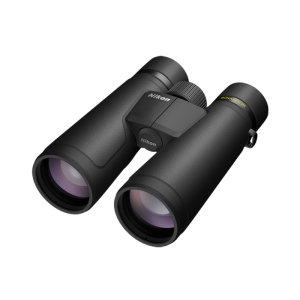
Our Rating
A
Price
$399.99
Lab optical
92%
Low light
88%
Field & ergonomics
97%
Durability
91%
Value
87%
PROS
Extreme 650g weight — unmatched in the 50mm class
Widest FOV (5.6°) in the test group for easiest target acquisition
Trusted Nikon brand and warranty
IPX7-rated waterproofing handles all kinds of weather conditions with ease
Balanced ergonomic design remains comfortable during extended use
CONS
Polycarbonate body lacks magnesium’s premium feel
Veiling glare issues in challenging light conditions
At $400, the price is steep compared to budget alternatives that deliver comparable everyday performance
Low-light performance score (88%) ranks near the bottom of the test group
At 650g, this is the lightest 50mm binocular I’ve ever handled. It’s genuinely impressive — Nikon achieved this with glass-fiber reinforced polycarbonate that still feels solid. The 5.6° field of view is the widest in this test group. The ED glass performs well in daylight, and the dielectric prism coatings deliver color-accurate images. However, nighttime performance reveals some chromatic aberration and veiling glare issues that more advanced optical systems handle with greater finesse.

Vortex Viper HD
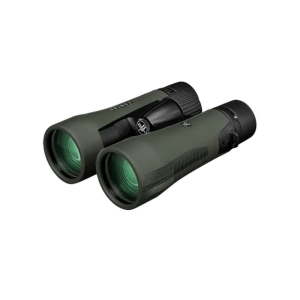
Our Rating
A
Price
$819.99
Optical
88%
Low light
90%
Field & ergonomics
95%
Durability
97%
Value
78%
PROS
Premium magnesium-alloy build with outstanding fit-and-finish
Silky-smooth, zero-play focus wheel mechanism
Well-balanced ergonomics for extended observation
CONS
Optical performance fails to justify the steep $819.99 price tag
Chromatic aberration control is average for this class and shows some purple fringing on high-contrast edges
Edge softness remains visible at maximum field-of-view
You pay a large premium mainly for brand name and warranty
The Vortex Viper HD has a reputation as the “entry-level premium” choice. After testing, I’m underwhelmed. Yes, the magnesium body is beautifully finished, the focus wheel is silky-smooth, and the HD ED glass delivers good resolution. Its 5.5° field of view is competitive, matching the top-ranked KIRNEX on paper, though edge-to-edge sharpness doesn’t quite keep up. But at $820, I expected more. The color fidelity and low-light performance don’t justify the premium price tag, and the chromatic aberration control leaves room for improvement at this price point. What you’re paying for here is mostly the Vortex brand and their legendary warranty.

Bushnell Engage EDX
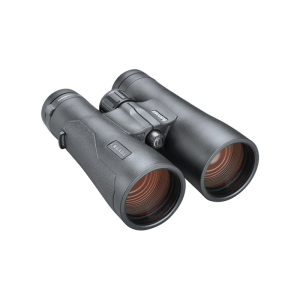
Our Rating
B+
Price
$379.95
Optical
89%
Low light
90%
Field & ergonomics
88%
Durability
92%
Value
88%
PROS
EXO-Barrier lens coating repels water, dust and oil effectively
Robust magnesium-alloy chassis with argon purging
Wide retail availability and solid manufacturer support
CONS
Noticeable softness towards outer field-of-view edges
Moderate weight, not ideal for long hand-held sessions
Field of view narrower than top-ranked competitors
Price-to-performance lags behind the top-ranked models in this comparison
Optical performance lacks the “wow factor” of true high-end products; detail rendering is merely average
Field performance score (88%) is relatively low, and long-term holding comfort is average
Bushnell’s EXO Barrier coating is a standout feature — it repels water and oil effectively in wet conditions. The ED Prime glass performs well, and 92% light transmission is respectable for this price point. However, it lacks the “wow factor” that distinguishes truly exceptional optics. The 5.3° FOV is decent but slightly narrower than the class leaders. At 829g, it’s average for this class.
Top Recommendation